
Contact us for consultation035.2826.222treebank@red.org.vn
Plant a tree
TREEBANK
ActivitiesApril 17, 2026

THE WATER IS NOT GONE, THE WATER JUST HAS NO PLACE

Article from Ms. Nguyen Thi Huong Giang, NCS for Sustainable Development.

Starting in April every year, millions of people in Manila, Philippines, face a familiar scene: Long queues in the middle of the night, carrying buckets in their armpits, waiting for water tankers to pass by.

On World Water Day 2026 in Manila, Environment and Natural Resources Minister Juan Miguel Cuna said: "The Philippines is facing the challenge of running out of water resources as national consumption exceeds nature's renewable capacity." The Philippine government was forced to declare a crisis, cut off domestic water on a rotating basis, and choke water sources for agriculture and industry.

The prospect of busy cities having to stop operating because of "thirst" is no longer a threat. According to a report by the World Resources Institute (WRI), by 2050, more than 50% of the global population will face water stress.

VIETNAM: THE PARADOX OF "EXCESS RAIN BUT STILL LACK OF WATER"

The world is "thirsty". The story from your country right next to the wall is a warning to our country. Vietnam is a tropical monsoon country, a network of intertwined rivers, how can there be a lack of water? But the truth is that we are facing two realities:
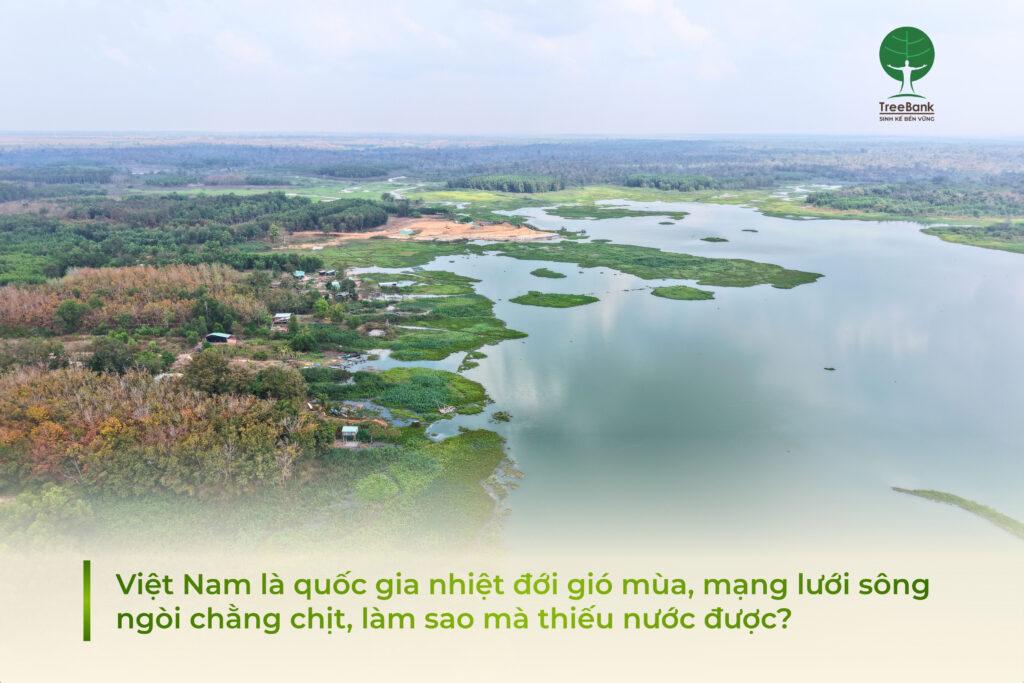
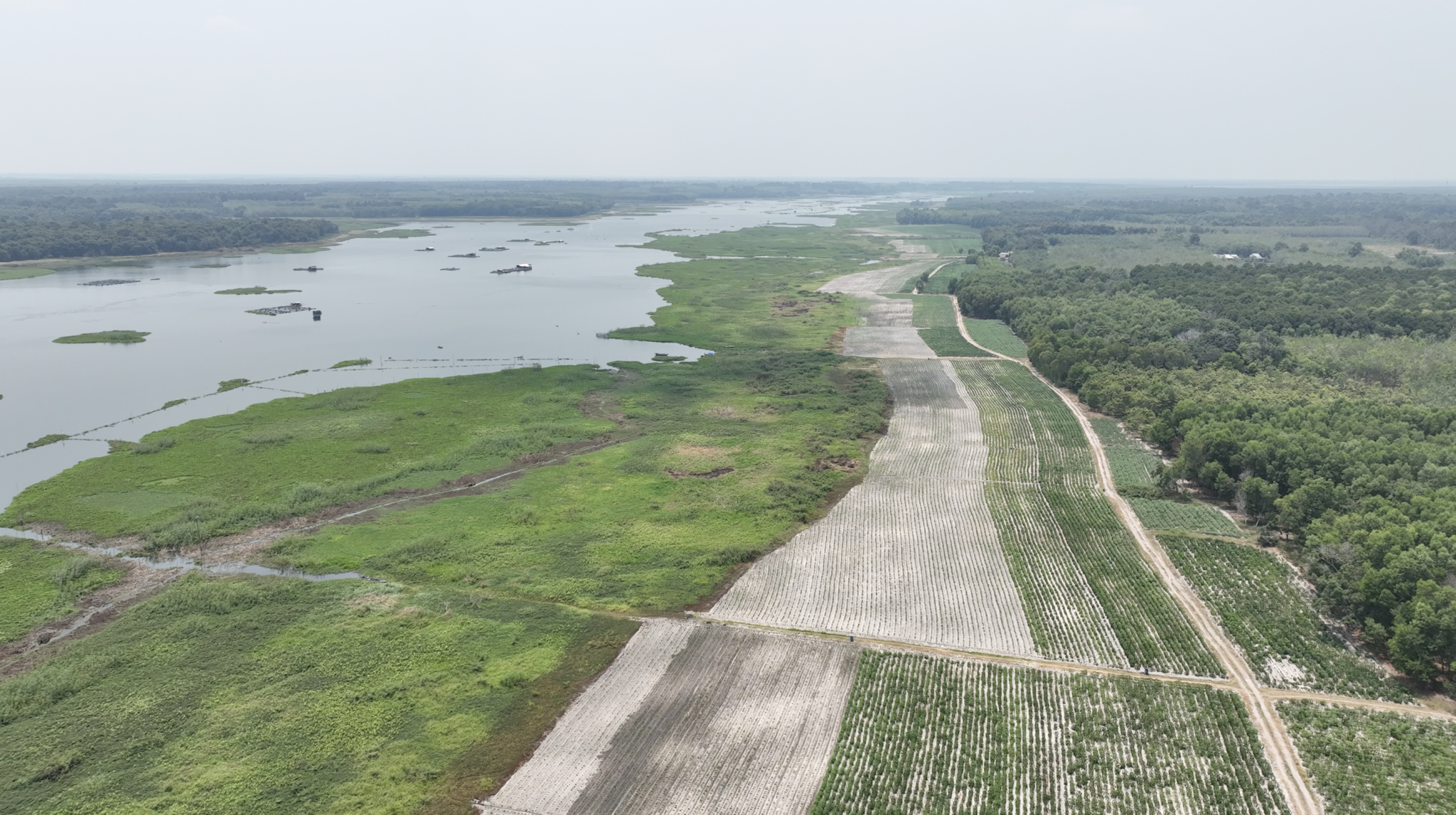
  • > Upstream dependence: More than 60% of Vietnam's water sources flow in from outside the territory. When transboundary rivers such as the Mekong or Red River are altered or blocked by upstream dam systems, the pressure on inland reservoirs such as Dau Tieng and groundwater is extremely great.
  • > The groundwater "account" is gradually being emptied: The groundwater geyser is like a "bank account" of nature. In big cities and key economic regions such as the Southeast, we are continuously withdrawing water for industry, daily life and agriculture faster than the rate of water regeneration of this "account". According to research by the National Center for Water Resources Planning and Investigation, groundwater levels in big cities and key economic regions are declining by an average of 0.3 – 0.5m per year. When the "storage" is empty, the soil layers will be compacted, causing permanent subsidence and loss of natural hydration.

SO WHERE DID THE RAINWATER GO? WHY DOES IT RAIN A LOT BUT THE SOIL IS STILL THIRSTY?

This is the time to talk about the vital boundary between HAVING FORESTS and LOSING forests.

  • > There are forests – ecosystems like water tanks: According to the Food and Agriculture Organization of the United Nations (FAO), a healthy forest with many layers of canopy and dense vegetation can retain 80-90% of rainwater. The foliage reduces the breaking power of raindrops, and the roots create natural pipes that carry water deep into the ground, slowly recharging the groundwater "bank". As a result, even though the dry season lasts, the streams from the forest still gurgle.
  • > Forest loss – bare land like concrete slides: On the contrary, when forests are lost, bare hills and mountains are no different from slides. 90% of the rainwater that falls will immediately turn into runoff on the surface. It does not penetrate the soil, but swept away mud, soil and rocks, causing landslides, plunging downstream to form flash floods. When the flood passed, the water evaporated rapidly. The land is completely dry. At the same time, the amount of sediment washed away will cause sedimentation in the irrigation lake bed, suffocating the water storage capacity.

IT'S TIME TO NURTURE THE UNDERGROUND VEIN AGAIN!

According to the climate change scenario of the Ministry of Natural Resources and Environment, the rainfall in the rainy season increases causing floods, but the amount of rainfall in the dry season decreases deeply, causing drought.

Without strips of forests and lakes as "natural reservoirs", we would fall into a cycle: drowning in floods in the rainy season and thirsty in the dry season.

WATER IS NOT NATURALLY PRODUCED FROM THE TAP. THE WATER IS NOT ENDLESS. WATER STARTS IN THE FOREST. When we protect protection forests and plant new forest trees, we are not only greening the ground, we are pumping life back into the deep ground, preserving the lifeline for the future.

———————-

Scientific references:

  1. World Water Resources Report (UN-Water): On the global water crisis.
  2. Vietnam Climate Change Scenario (Ministry of Natural Resources and Environment): Changes in rainfall in the Saigon – Dong Nai river basin.
  3. Research on lake bed sedimentation (Institute of Irrigation Planning): Proving that the loss of watershed forests reduces the storage capacity of Dau Tieng lake.

———–

SERIES OF ARTICLES: SOUTHEAST LIFE CIRCUIT

Stay tuned to see Lesson 2: Dau Tieng Lake – How is the "water bag" of the Southeast beating the survival pulse under the pressure of lake bed sedimentation and the survival of protective forest strips?

Share: